MEPCO Tariff Rates 2026 – Unit Price, Slab System & Taxes Explained
MEPCO tariff rates play a major role in determining your monthly electricity bill. Whether you’re a residential or commercial consumer, understanding the latest MEPCO tariff structure can help you estimate your electricity expenses more accurately and avoid unexpected charges. MEPCO follows a NEPRA-approved slab-based tariff system, where the per-unit rate increases as electricity consumption moves into higher usage slabs.
This guide explains the latest MEPCO unit rates, protected and non-protected consumer categories, electricity slabs, and all applicable taxes, surcharges, and adjustments included in MEPCO bills for 2026. To check your current bill details, visit our MEPCO Bill Online Check page. You can also use the MEPCO Bill Calculator 2026 to estimate your upcoming electricity bill based on your expected unit consumption and understand how tariff changes may affect your monthly charges.
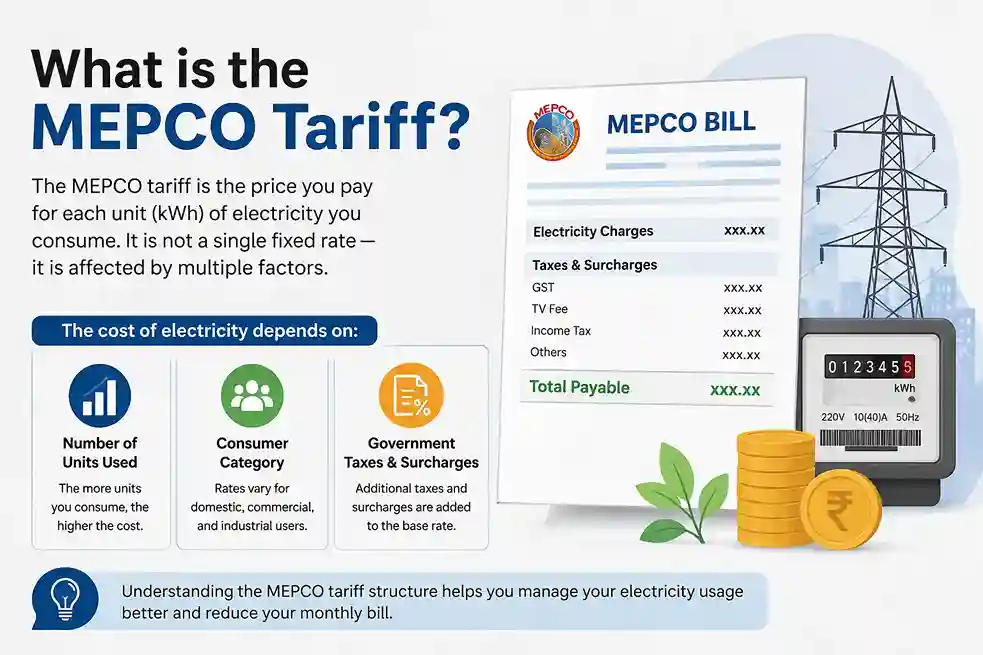
What is the MEPCO tariff?
The MEPCO tariff is the rate charged for each unit (kWh) of electricity consumed by a customer. It determines how much you pay for electricity and is approved by the National Electric Power Regulatory Authority. The final cost of your electricity bill is not based on a single fixed rate; instead, it varies according to several factors.
Your MEPCO electricity charges mainly depend on the following:
- Number of Units Consumed – Higher electricity usage can place you in a higher tariff slab, increasing the per-unit cost.
- Consumer Category – Rates differ for domestic, commercial, industrial, agricultural, and other consumer types.
- Taxes & Surcharges – Additional charges such as GST, electricity duty, fuel adjustments, and government surcharges are added to the bill.
Understanding how the Mepco tariff works can help you estimate your monthly electricity expenses more accurately and identify ways to reduce your overall bill.
MEPCO Slab System Explained
MEPCO uses a progressive slab system, meaning the following:
The more units you consume, the higher the rate you pay
Example:
- First 100 units → Lower rate
- Next 100 units → Higher rate
- Above 200 units → Even higher rate
Tariff Rates 2026 (Domestic)
Protected Consumers (Low Usage)
- 0–100 Units → Lower rate
- 101–200 Units → Moderate rate
Non-Protected Consumers
- 0–100 Units → Standard rate
- 101–200 Units → Increased rate
- 201–300 Units → Higher rate
- 301–700 Units → Expensive rate
- Above 700 Units → Highest rate
Rates change frequently based on government policy.
Tariff by Consumer Type
Domestic Users
- Slab-based pricing
- A subsidy may apply
Commercial Users
- Higher unit rates
- No subsidy
Industrial Users
- Special tariff structure
- Load-based pricing
Taxes Included in MEPCO Bill
Your bill is not just units; it includes multiple taxes:
Common Charges
- GST (General Sales Tax)
- FPA (Fuel Price Adjustment)
- TV Fee
- Electricity Duty
- Quarterly Adjustment
What is Fuel Price Adjustment (FPA)?
FPA is an extra charge based on fuel cost changes.
If fuel prices increase → bill increases
If fuel prices decrease → bill reduces
How Tariffs Affect Your Bill
- More units = higher slab = higher cost
- Peak hour usage increases the total bill
- Taxes add 30–50% extra to the total
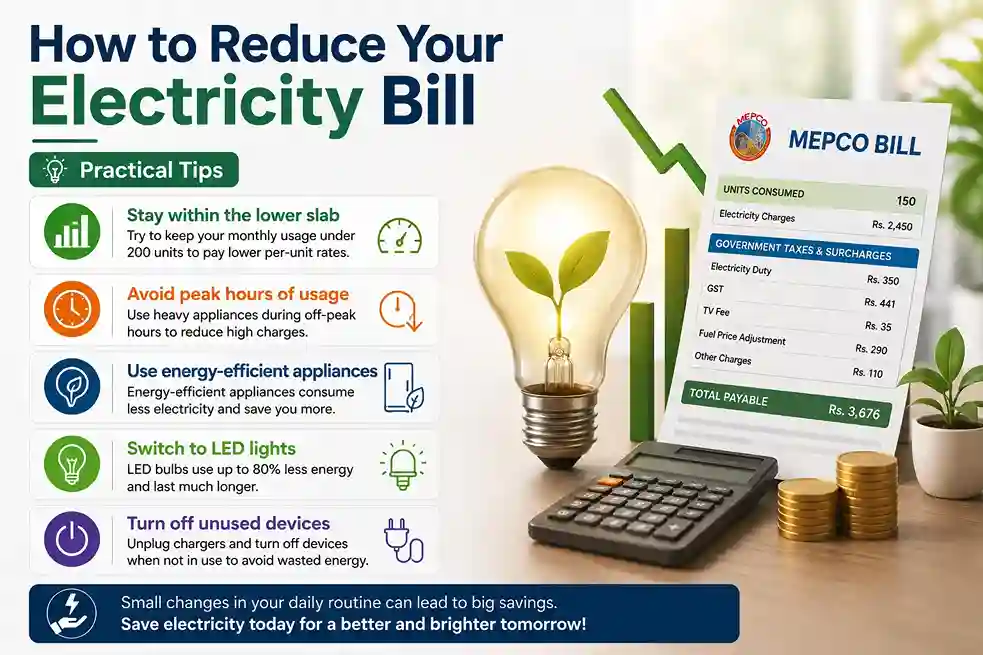
How to Reduce Your Electricity Bill
Practical Tips
- Stay within the lower slab (under 200 units if possible)
- Avoid peak hours of usage
- Use energy-efficient appliances
- Switch to LED lights
- Turn off unused devices
Common Misunderstandings
“The rate is the same for every unit.”
Incorrect: Electricity is charged using a slab system, where the per-unit cost increases as your usage goes higher.
“The bill only includes unit charges.”
Incorrect: Your electricity bill also includes taxes, surcharges, and additional adjustments, which significantly increase the total amount.
FAQs
Final Words
The MEPCO tariff system may seem complex at first, but understanding electricity slabs, unit rates, and applicable taxes can help you manage your energy consumption more effectively, estimate your monthly expenses accurately, and reduce unnecessary electricity costs.